Tuesday, November 11, 2014

Teaching in the Garden


            Head full of tight curls, mischievous eyes, and an immense smile peer across the bed of freshly dug soil. “Un, deux, trois” recites the youngster as he places a seed in each hole. Little fingers gently cover each seed with a blanket of earth. One would imagine this to be a scene in someone’s backyard garden, but this in fact is a sight become increasingly common in schoolyards across North America. Numerous studies on the benefits of having “learning gardens” have now taken place. Because of positive findings in the improvement of skills, increase in health, and financial savings, all elementary schools should have a learning garden.
            Children who have participated in learning garden programs have shown improvement in skill based areas such as test scoring, social behaviors, social development, and life skills. The findings of one controlled study, performed by Klemmer, Waliczek and Zajicek, which compared science scores between traditional teaching methods and a garden program shows “that fifth grade students who participated in gardening activities as part of their science education scored 14.9 points higher compared to …the control group”(450). In a study on the integration of gardening into school curriculum, DeMarco, Relf and McDaniel states that gardening provided “interact[ion] with nature on a personal level that promotes positive behavior changes”(277). They also found that when the students were gardening together it developed cooperation, and that the teachers were able to heighten social development by introducing students to topics of “community service, diversity in human culture, and environmental stewardship” (279). Furthermore, a one year study of a school garden program by Robinson and Zajicek found that the students had “increased their overall life skills as well as improved teamwork skills and self-understanding”(456). Beane points out that there is a natural progression of life skills, which starts with a young child taking on tasks and having responsibility for the completion of the task (cited in Robinson, 456). The successful completion of a task leads to an increase in self-confidence and self-esteem, progresses to an increase in participation in social activities, a higher likelihood of high school graduation and later a higher life achievement (Beane cited in Robinson, 456). Therefore, having a learning garden essentially leads to a higher success rate in life for the students who participate.
            Another added benefit of learning gardens is the positive effect they have on health. Rui Hai Liu of Cornell University points out that daily vegetable and fruit consumption results in a reduction of health issues such as cardiovascular disease, Alzheimer disease, cataracts, cancer, stroke and more (517S). Liu also states that prevention is more effective than treatment (517S). In order to prevent these illnesses, children need to eat fruits and vegetables regularly. Health Canada recommends that children aged 4-8 eat five servings of fruits and vegetables per day and that children aged 9-13 eat six servings per day. A Statistics Canada report by Didier Garriguet shows that 70% of children aged 4-8, 62% of girls aged 9-13, and 68% of boys aged 9-13 eat less than the recommended daily intake (20). How does this relate to learning gardens? It is not enough to know that children need to eat more fruits and vegetables. What has to occur is for the children to eat the fruits and vegetables. A study by PhD student Jennifer L. Morris points out that increasing vegetable consumption is a two-step process: the first step is exposure, of which learning gardens are a great method of repeating exposure, and the second step is to increase the willingness to try the vegetables (46). The children involved in Morris’ study “were more willing to taste” the vegetables in comparison to the students who had not participated, and that the learning garden students ranked the taste of the vegetables more favourably after the gardening experience (45). When a child is more willing to try a fruit or vegetable and feels that the fruit or vegetable tastes good they are more likely to eat more fruits and vegetables in comparison to a child that is not as willing to try. This increase in vegetable and fruit consumption leads to better health.
            Learning gardens also have positive effects on health for the simple reason that it is an outdoor activity. Harvard Health Publications (HHP) points out that because outdoor activities increase exposure to light and Vitamin D the results are a positive effect on mood, as well as protective effects from diseases including cancer, depression, osteoporosis, stroke and heart attacks (1). The improvement in concentration, quicker healing rate, and increased physical activity are also listed by HHP as health related benefits of outdoor activities (1).
                        All of these benefits in skills and health lead to another interesting aspect of learning gardens: the financial savings. The most obvious is the savings that will result from the health benefits. An overall reduction in a wide variety of illness and disease will directly affect the cost of medical care. According to the Healthy Canadians report by Health Canada, “[i]n 2010, total health expenditures in Canada were forecast as $191.6 billion” (6). In 2004, Margot Shields of Statistics Canada reports that the rate of overweight/obese children had risen 70% since 1978 (29). As being overweight in childhood relates to health issues in later life, an increase of overweight/obese children of 70% is going to drastically affect medical costs in the coming decades; consequently, as learning gardens contribute to wiser eating choices and physical activity, then they also lead to reductions of overweight/obese children, and the associated health costs.
            Another financial savings aspect is in the cost savings of growing versus buying fruits and vegetables. For example, one package of carrot seeds at $3 contains anywhere from 500-1000 seeds. Even with a low success rate of 25%, there would still be a crop of 125-250 carrots. This is a much larger number than the same $3 would yield in the grocery store. Obviously, there are more costs to the growing of the vegetables and it is also dependent upon the type of plants grown; but as Dan Shapley points out a 1600 square foot garden could easily produce over $2000 in fruits and vegetables, 7 times the value of the original investment (Shapley). If there was an excess of fruits or vegetables, the students could also choose to sell the produce as a fundraising venture for other school projects, or they could donate the produce to the local food bank or soup kitchen, which again would translate to an overall savings for the community in general.
            Critics of a learning garden might question whether gardening is really the best method to produce increased skills, improved health and money savings; but it does not really matter if learning gardens are the best method. What does matter is that learning gardens are effective.  Critics might question the feasibility of a learning garden and the participation rate of teachers, which is certainly a relevant question. The answer is that there are numerous proven programs already developed and therefore it is more a matter of evaluating the different programs to find the one that best suits the school and the teachers. Critics might also argue that technology is the way of the future and that gardening is old school; but the fact remains that everyone needs to eat and therefore the need for the knowledge of how to grow fruits and vegetables is still of importance despite the surge in technological advancements. Between the increases in skills, the improvement in health, and the financial savings, it simply makes sense that all elementary schools should have a learning garden.
          
Works Cited:
DeMarco, Laurie, Diane Relf, and Alan McDaniel. “Integrating Gardening into the Elementary School Curriculum.” HortTechnology 9.2 (1999): 276-281. Web. 5 Nov.2013
Garriguet, Didier, “Canadians’ Eating Habits.” Health Reports Statistics Canada 18.2 (2007): 17-32 Web. 9 Nov. 2013
Government of Canada. “Canada’s Food Guide.” Health Canada. Government of Canada, 2012. Web. 9 Nov. 2013
Government of Canada. “Healthy Canadians-A Federal Report on Comparable Health Indicators 2010.” Health Canada. Government of Canada. 2010. Web. 9 Nov. 2013
Klemmer, C.D., T.M. Waliczek, and J.M. Zajicek. “Growing Minds: The Effect of a School Gardening Program on the Science Achievement of Elementary Students.” HortTechnology 15.3 (2005): 448-452. Web. 5 Nov. 2013
Liu, Rui Hai. “Health Benefits of Fruit and Vegetables are from Additive and Synergistic Combinations of Phytochemicals.” Abstract. The American Journal of Clinical Nutrition 78.3 (2003): 517S-520S. Web 9 Nov. 2013
Morris, Jennifer L., Ann Neustadter, and Sheri Zidenberg-Cherr. “First-grade Gardeners More Likely to Taste Vegetables.” California Agriculture 55.1 (2001): 43-46 Web. 8 Nov 2013
 “A Prescription for Better Health: Go Alfresco.” Harvard Health Publications 35.9 (2010): 1 Web. 9 Nov. 2013
Robinson, Carolyn W., and Jayne M. Zajicek. “Growing Minds: The Effects of a One-year School Garden Program on Six Constructs of Life Skills of Elementary School Children.” HortTechnology 15.3 (2005): 453-457 Web 6 Nov. 2013

Shapley, Dan. “The $600 Garden Vegetable You Can Grow.” the daily green. Hearst Communications, 28 March 2011. Web. 9 Nov. 2013

Shields, Margot. “Overweight and Obesity Among Children and Youth.” Health Reports Statistics Canada 17.3 (2006): 27-42 Web. 9 Nov. 2013
 West Coast Seeds. West Coast Seeds. WCS, 2013. Web 9 Nov. 2013

Sunday, April 20, 2014

Gouda is Gooda!


Smoked Gouda Macaroni and Cheese

1 slice whole wheat bread
1 Tbsp butter
¼ cup sliced green onions
2 garlic cloves, minced
2 Tbsp flour
2 cups skim milk
½ tsp salt
½ tsp black pepper
½ cup shredded smoked Gouda (2 oz)
1/3 cup grated Parmesan (1.5 oz)
5 cups coarsely chopped fresh spinach
4 cups hot cooked macaroni (2 cups uncooked)

Preheat oven to 350

Place bread in a food processor, and pulse until crumbs measure about ½ cup

Melt butter in large saucepan over medium heat. Add onions and garlic, cook 1 minute. Add flour and cook 1 minute, stirring constantly. Gradually add milk, salt and pepper, stirring constantly with a whisk until blended. Bring to a boil, cook until thick (about 2 minutes). Add cheese; stir until melted.

Add spinach and macaroni to cheese sauce, stirring until well blended. Spoon mixture into a 2 quart baking dish coasted with cooking spray. Sprinkle with bread crumbs. Bake at 360 for 15 minutes or until bubbly.

Serves 4
 
Was doing a cleanup of the computer and stumbled upon this recipe that I haven't made in a very long time. PK complained about the green stuff every time I made it so I stopped. Might be time to try it again seeing as he is quite happily eating the green stuff as pesto pasta these days. Perhaps I'll try replacing the bread crumbs with some ground seeds for some extra goodness.

Saturday, February 22, 2014

Rbubarb & Strawberry Ice Cream

From Erin Hill

3 cups sliced rhubarb (fresh or unthawed frozen)
2 cups sugar
2 cups water
1 cup sliced fresh strawberries
3 cups miniature marshmallows
2 Tbsp lemon juice
2 cups whipped cream

Combine rhubarb, sugar, water and strawberries. Bring to boil; reduce heat. Simmer, uncovered, 10-15 minutes or until fruit is very tender, stirring occasionally. Reduce heat. Add marshmallows and lemon juice. Cook and stir until marshmallows are melted. Transfer to a very large mixing bowl. Cover and chill 4 hours or overnight.

In a chilled mixing bowl beat whipping cream until soft peaks form. Fold cream into fruit mixture.

Freeze in ice cream maker. Transfer to freezer container, cover and freeze about 4 hours until firm.

Makes approx. 10 cups.

Blueberry Corn Salad

This one isn't my creation. Believe it comes from Better Homes and Gardens magazine - but don't quote me one that.

6 cups corn
1 cup blueberries
1 cucumber
1/4 cup red onion
1 jalepeno
2 Tbsp lime juice
2 Tbsp oil
1/2 tsp cumin
1/2 tsp salt

Mix, chill and eat. Yummy!

Monday, January 27, 2014

Eric Akis Butterscotch Crispy Bar


This recipe is from Butter Baked Goods: Nostalgic Recipes from a Little Neighborhood Bakery (Appetite by Random House, $35).
Author Rosie Daykin says this bar is a fun take on the traditional Rice Krispies Treat. They set up nice and firm, which makes them great travellers. Perfect for kids’ lunches or as a little something to stash in the bottom of your bag.
And what could be better than rooting around in your handbag, searching for your car keys, only to discover a Butterscotch Crispy Bar?
Makes: 32 bars
8 cups Rice Krispies
1 cup dark brown sugar
1 cup dark corn syrup
1 cup plus 1 Tbsp butter
2 1/4 cups butterscotch chips
1 cup dark chocolate chips
You will need:
  • (9x9-inch) pan buttered and lined with parchment paper
  • small piping bag fitted with a small round tip (optional)
1. Place the Rice Krispies in a large mixing bowl and set aside.
2. In a medium saucepan over medium-high heat, combine the sugar, corn syrup and 1 cup of the butter. Bring to a boil and then remove the pan from the heat. Add 2 cups of butter- scotch chips and stir until completely melted.
3. Pour the butterscotch mixture over the Rice Krispies and mix well. Press the cereal mixture into the prepared pan firmly and evenly. Set aside.
4. In a double boiler, or in a heatproof bowl set over a saucepan of simmering water, melt the dark chocolate chips and remaining one tablespoon of butter. Pour over the cereal base and spread evenly with the back of a spoon or a small offset spatula.
5. In a double boiler, or in a heatproof bowl set over a saucepan of simmering water, melt the remaining 1/4 cup of butterscotch chips.
Use a small spoon or the small piping bag to drizzle the melted butterscotch chips back and forth over the chocolate layer.
6. Chill in the refrigerator for 1 hour or until the chocolate has set.
7. Run a small knife along the two edges of the pan that do not have parchment handles. Carefully remove the slab from the pan and cut into 1x2-inch bars. Make sure to use at least a 10-inch knife to avoid cutting and dragging the knife across the bars.
Note: These bars will keep in an airtight container for at least a week, or in the freezer for up to three months.


My thought on this recipe: delish but almost like a candybar. The hubby really likes this one. Super easy to make. A fun change from regular crispy squares. Not for every day but definitely a keeper.

Sunday, December 22, 2013

Margaret


My newest Kiva loan - Margaret is 28 years old and married. She has two children, ages 4 years and 6 years. She describes herself as a confident individual.

She operates a grocery store where she sells fruits and vegetables. She has been involved in this business for four years. Her primary customers are small-scale. She describes her biggest business challenge to be the lack of a permanent place to do business.

She will use the KES 70,000 loan to add stocks of fruits and vegetables. Her business goal is to be successful within five years.

This is her second loan with SMEP DTM. She will use the anticipated profits to buy a piece of land.

Monday, December 9, 2013

Pumpkin Loaf

1.5 cup oil
2 cup pumpkin
4 eggs, beaten
2 cup sugar
3 cup flour
2 tsp baking powder
2 tsp pumpkin spice
1 tsp salt
2 tsp baking soda

Preheat oven to 350.

Mix together oil, pumpkin, eggs and sugar. Add remaining ingredients and beat well.

Divide into two loaf pans

Bake 50 minutes or longer until set.

A recipe from my grandmother's collection - noted as being from Betty Burroughs


Easy Drop Biscuits

2 cups flour
1 Tbsp baking powder
1/2 tsp salt
1/3 cup butter
1 cup milk

Preheat over to 425

Stir dry in bowl. Cut in butter. Add milk.

Drop into 8 mounds on baking stone.

Bake approx 15 minutes until golden.


Christmas baking

Orange and Brandy Balls
Peanut Butter Balls
Anise and Orange Shortbreads (GF)
Midnight Mints
Mincemeat Tarts
Marshmellow squares
Cherry and Chocolate Shortbread

Sunday, December 1, 2013

Advent Countdown 2013

1 - Write a letter to Santa
2- Make salt dough snow family
3- Baking with Mom
4-
5-
6- Fun afternoon with Daddy
7- Watch the truck parade with Mimi and Papa
8- Go ice skating
9- Go see the gingerbread houses at Country Grocer
10-

hhhhhmmmmmmm......lost count somewhere along the way.

Lesson learnt from this year. Have a big list of possible ideas to choose from. Trying to come up with ideas the night before plus be organized doesn't work well.

Monday, June 24, 2013

Buying some chick, chick, chickens

okay so they aren't for me but still............

 
Joyce lives in the Litein area of Kenya.
She has 4 children and has been working with poultry for 5 years.
Her primary income sources are milk, eggs and tea.

Her biggest challenge is 'Insufficient funds.'
Animals on the farm have been given the names of 'Simba.'

Joyce was asked why she chose Juhudi Kilimo for this loan, to which she replied: 'Low interest.' This client was also asked what was learned during Juhudi's required micro-finance training session: 'It has loans with low interest."

Her highest monthly expense is school fees. When asked how will this loan benefit her family,
Joyce replied, "More income to family."

As part of Juhudi's loan appraisal process, each borrower's assets are evaluated.
Joyce owns the following: a cow and poultry' but does not own a pig, pump, bicycle, motorcycle, or automobile. Juhudi Kilimo also tries to measure any change in living standards based on this loan. This borrower has in the household a mosquito net but does not have electricity,
solar power, running water, sewing machine, TV, or DVD.
 

Saturday, June 8, 2013

Kiva - Newest Loan

Milenka is 20 years old. She works knitting wool sweaters and wraps from alpaca wool for women who wear traditional skirts. She has her workshop and residence in the Kalajahuira area. This loan is her first cycle in the institution. Milenka is going to use this loan to buy alpaca wool wholesale to knit her sweaters and wraps since she sells alot this time of year because it is very cold. She also delivers orders to different markets in the city of El Alto. Her reason for asking for this loan is to increase her working capital. Milenka faces challenges in her business such as stocking her merchandise and she is going to use the profits to keep buying her materials wholesale to knit her sweaters.                      

Monday, May 13, 2013

Chocolate Banana Bread

Gluten Free - High in Iron, Protein, Fibre, Calcium & Omega 3s

Wet Ingredients
2 medium sized bananas, smashed
1/2 cup oil (olive, walnut, etc)
2 eggs
1 cup sugar
2 tsp vanilla extract
1/2 cup Greek yogurt

Dry ingredients
2/3 cup teff
2/3 cup cocoa powder
2/3 cup cornstarch
1/2 tsp salt
1 tsp baking soda
3/4 cup walnuts

To flour pan
1 Tbsp sugar
1 tsp cocoa

Directions:
Preheat oven to 350

Grease loaf pan and dust with sugar/cocoa. Reserve extra to sprinkle over top.

Mix together wet ingredients.
Mix together dry ingredients (except walnuts)
Mix wet and dry together and then mix in walnuts.

Pour batter in pan. Bake approx. 60 minutes until toothpick comes out clean.

Enjoy!

Monday, May 6, 2013

Kiva loan - Concilie

 
Concilie is a member of the Twizere II group. She lives in Gitega, Burundi. She is 38 years old and married to Leonard, a businessman. Together they have one thirteen year old child who attends school.

She has been in the business of selling beans and corn for four years.

She is on her second loan with Turame. With the KIVA loan, she will increase her capital and buy a large supply of beans and corn to sell in order to earn more.

The income she earns from her business will allow her to feed her family well.

Friday, April 26, 2013

Taco Seasoning

So after trying several different recipes out there on the net this is my favourite so far.

Ingredients
2 tablespoons chile powder
2 teaspoons corn starch
2 teaspoons Mexican oregano
1 + 1/2 teaspoons onion powder
1 teaspoon sweet or smoked paprika
1 teaspoon ground cumin
1/2 teaspoon garlic powder
1 teaspoon coarse salt or 1/2 teaspoon fine/table salt
1/4 teaspoon black pepper
1/2 teaspoon cayenne pepper or red pepper flakes, optional

Instructions
  1. Combine all the seasonings together in a jar and shake until well mixed.
  2. Use 2 tablespoons seasoning mix for every pound of ground beef plus 1/2 - 2/3 cup water.
  3. You can tweak the seasoning to suit your own tastes. I went easy on the salt so you can salt and pepper to taste
Go to Cinnamon Spice & Everything Nice to find the original posting and much more yumminess from Reeni

Sunday, April 21, 2013

Broccoli Cheddar Soup


Ingredients
  • 4 Tbsp unsalted butter, divided
  • 1/2 cup diced yellow onion
  • 1 lb. broccoli (including upper stems)
  • 2 cups of vegetable stock (or chicken stock)
  • Pinch of nutmeg
  • Pinch of red pepper flakes
  • 1/4 tsp garlic powder
  • 3 Tbsp all-purpose flour
  • 1 cup half and half (or use 2 cups total of milk)
  • 1 cup milk
  • 8 oz. mild cheddar cheese
  • Salt and pepper to taste

Melt 2 tablespoons of butter, on medium-low heat, in a large pot or dutch oven. Add the onion and a pinch of salt, to sweet the onion, and cook until tender, about 5 minutes.

Add the broccoli, vegetable stock, nutmeg, red pepper flakes, and garlic powder to the pot. Bring to a boil and then simmer for 20 minutes.

As the broccoli cooks, make your roux by melting 2 tablespoons of butter in a medium saucepan. Add flour and whisk constantly until the flour has turned a pale color, about 1 to 2 minutes. Keep watch as the roux will quickly turn dark and take on a different flavor. Add the half and half and the milk and allow to cook for 5 minutes, stirring occasionally. Remove from heat and add the cheese, stirring to combine. Set aside.

Using an immersion blender, or a regular blender, blend the broccoli until your desired thickness. Add the cheese mixture and salt and pepper to taste. If the soup is too creamy for your desired taste, simply add a bit of stock to thin it out.

Source: The Way to His Heart, inspired by Panera Bread
Thank you Maeghan for sharing this recipe with the world.

Wednesday, March 20, 2013

Wilson


Wilson is 35 years old and has two children, ages ten and five. He works managing a flower nursery located in the Pedregal area. This loan is his first cycle within our institution. Wilson is going to use this loan to purchase construction materials to build a larger space which he will add on to his nursery. The reasons he is requesting this loan is so that he can make some needed repairs and because he needs working capital. Wilson faces challenges in his business, mainly being able to expand and grow a great variety of indoor decorative flowers. He will use his profits to expand his business. He wants to eventually purchase a larger lot so that he can have about three different nurseries and continue growing a large variety of flowers.

Friday, January 18, 2013

Ecra


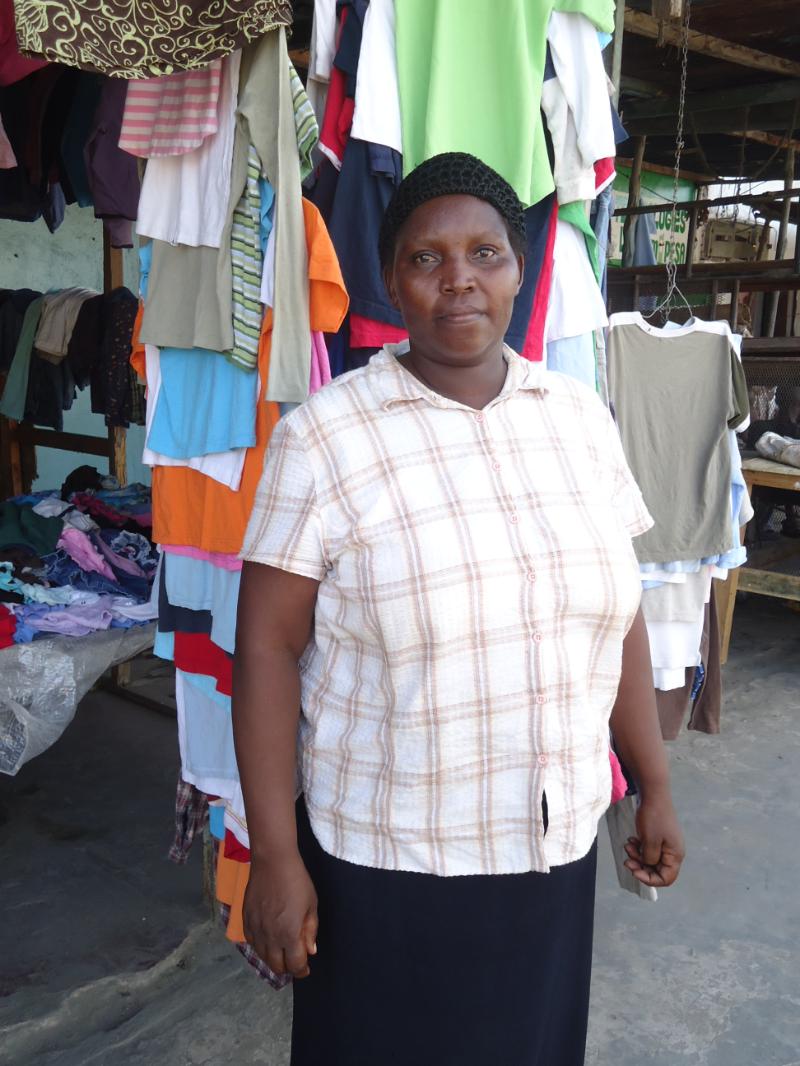
Ecra is a resident of Changamwe, Kenya. She is a clothes dealer; a business she began 5 years ago. She is married and has three school-going children. Ecra was introduced to Milango by her friends; she joined in order to access funding for her business.

Ecra is glad about the progress that her business has made. The new clothes she purchased from her recent loan enabled her business to repay the loan quickly. She is grateful to the lenders for such great support and for the impact on her life and business.

Her clothing dealership has continued to progress well and she now intends to increase the stock. Ecra is applying for a loan of 128,650 Kenya shillings to purchase new clothing. She will use the extra income from this loan to educate her children.

And this is who are newest loan is going to.

Thursday, December 27, 2012

And Our Family Grows....

We have decided to add to our family.
 Perhaps not in the conventional sense but in the sense that works for our family.
 
As I have not been doing the Christmas present thing on my side of the family I figured this was a way I could give without more materialistic items being bought.
 
So Mom and Dad meet your new grand-daughter.
 K, P and A - meet your new niece.
C, R, T, A and D meet your new cousin.
 
I hope you all understand and appreciate why I have chosen to do this.
This is a way we can help others.
And we can expand our ever growing family.
 
I now present our sponsor daughter - Eddah


PK has said he wants to paint more cards to help pay for his new sister - so sweet.
So if anyone needs cards for anything you know who to call.
If anyone wants to contribute to her upbringing just let me know.
 
Also an update on Ayyumen.
He is doing great. Goes to school now.
Loves football (our soccer).
I have a couple letters and some drawings at the house if anyone wants to see them.
 
That's it for now.


Sunday, December 16, 2012

Newest Kiva Loans

Amazing how fast the repayments can come in.

We are now able to start a new loan from the repayments

So here she is

Ayisha
 
Ayisha is married and has four children. All go to school except the youngest who is three months old. She usually sells shirts for men and skirts for ladies. She has spent six years in the business. With the loan, she wants to add more shirts and skirts to sell.
 
PK painted the cards for Papa's Christmas concert. With the money he was paid for doing the cards we were able to fund a new loan.
 
Abraham
 
Abraham is a carpenter in Mombasa. He has been in this business for the last nine years and he is doing great. He is requesting a second loan to purchase timber for making more furniture. He hopes to use the anticipated profit to repay his loan, after successfully repaying the first loan. He hopes to own a bigger workshop in the future.